
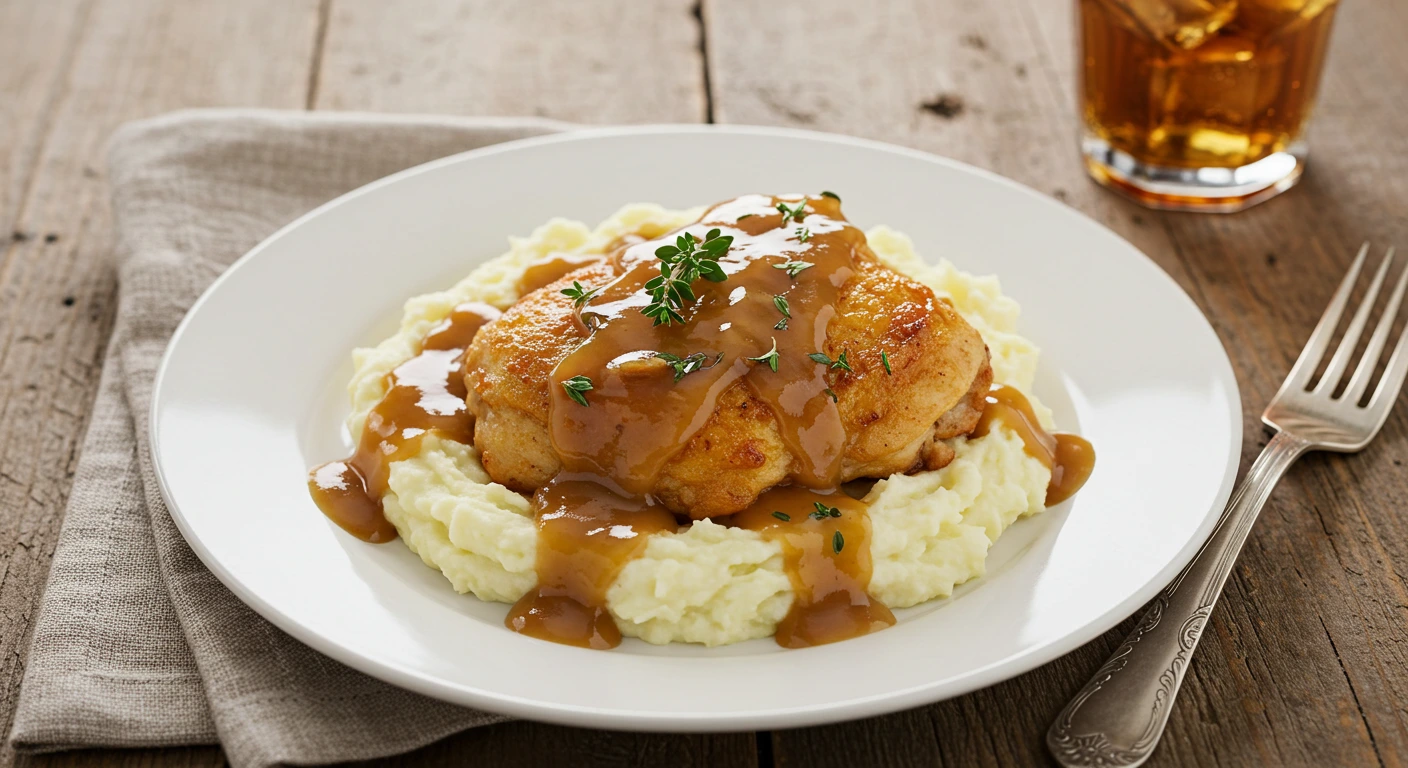
Chicken and gravy is one of those meals that feels right any time you make it. It’s simple, filling, and always delivers on flavor. You don’t need a long list of ingredients or a complicated process to get it on the table—a skillet, a few pantry basics, and you’re ready to make dinner without hassle.
This chicken and gravy recipe is all about comfort food done the easy way. The chicken turns golden and juicy, the gravy comes together smooth and rich, and you have a full dinner in one pan. Whether cooking for yourself or making a meal that feeds the family, it works.
The best part is how flexible it is. You can keep it classic or add touches with herbs, spices, or vegetables. However you go at it, you’ll end up with a homey and satisfying dish.
What is chicken and gravy?
Origins and Traditions
Chicken and gravy isn’t tied to one region or famous chef—it’s more of a kitchen staple from everyday cooking. People leaned on it because chicken was cheap, broth and flour were always handy, and turning it into gravy stretched a meal further. It made simple food taste more filling without much effort. Over time, it became a dish you’d see at Sunday dinners, holidays, or a regular weeknight when you crave something hearty. It’s the food that carries a sense of home no matter where you eat it.
A Homestyle Classic With Deep Roots
People in the South often claim it as part of their food culture, but versions of chicken and gravy appear everywhere. Some use fried chicken smothered in creamy gravy, while others lean on skillet-seared chicken with brown gravy. The idea is the same regardless of the version: stretch simple ingredients into a meal that feeds everyone.
How It Became a Comfort Food Staple
The reason it stuck around is pretty simple—it’s reliable. You don’t need special tools or a long grocery list to make it. A few simple steps and common ingredients are enough to put a satisfying meal on the table. That’s why chicken and gravy have earned their spot as classic comfort food—filling, cozy, and making simple ingredients stretch into an authentic dinner.
Why People Love It
Chicken and gravy have stuck around for a reason—it works. You don’t need to be an expert to cook it, and you don’t have to shop for specialty ingredients. It’s a recipe that fits weeknight dinners, family get-togethers, or meal prep when you want leftovers that taste good the next day. What people like most is how flexible it is. You can keep it classic and plain or load it with extra herbs, spices, and vegetables. Either way, the result feels satisfying without additional effort.
Simple Ingredients, Big Flavor
Most of what goes into chicken and gravy is already in your pantry—flour, broth, butter, and a few seasonings. Put them together, and you get a dish that tastes like more work than it really takes. That balance of easy steps and bold flavor is what keeps people cooking it.
A Meal That Brings People Together
This recipe shows up at the table when comfort is needed most. It’s filling, affordable, and easy to scale for more people. Whether you’re making it for yourself, a couple of plates, or a whole family, chicken and gravy deliver a full meal that everyone can sit down and enjoy.
Chicken and Gravy Ingredients
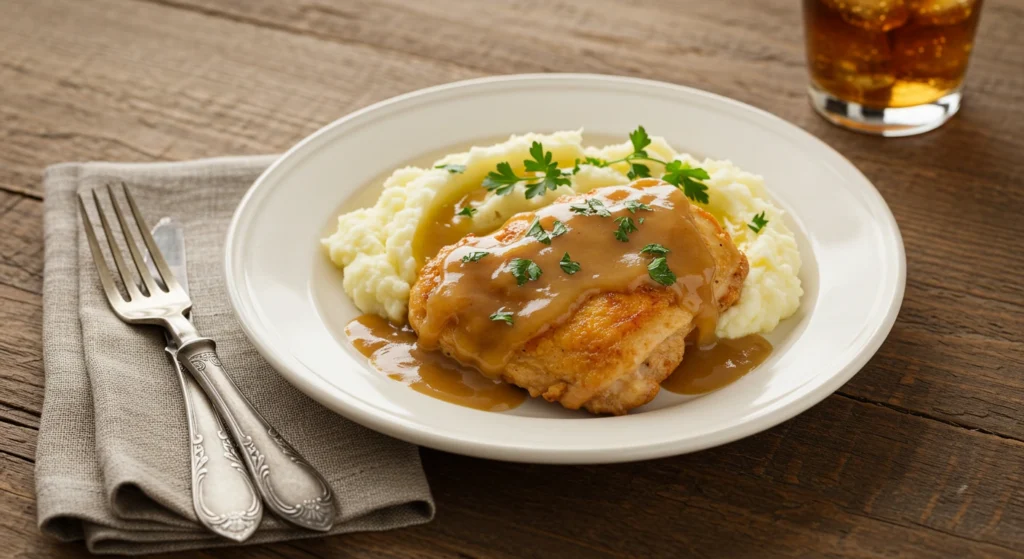
Core Ingredients You Need
This recipe doesn’t ask for anything fancy. Most of the flavor comes from basic ingredients. Chicken gives the meal its heart, and the gravy is made from items you probably already keep on hand—fat for richness, flour to thicken, and broth to tie it all together. A few seasonings bring it to life; from there, you’ve got a complete dish.
The Chicken that works best
You can go with breasts if you like quick cooking and neat slices, or use thighs for more flavor and moisture. Either way, both soak up the gravy nicely, so it’s really about what you have in the fridge or what your family likes best.
Building the Gravy Base
The sauce starts with something rich—usually butter or oil—then flour goes in to make a roux. Slowly adding broth turns it into a smooth gravy. Salt, pepper, and herbs like thyme or garlic powder balance it. It’s straightforward but delivers a ton of flavor for the effort.
Optional Flavor Boosters
After setting up the core ingredients, bring extras that change the flavor without making the recipe harder. These aren’t required, but they let you put your own spin on the chicken and gravy. Some add richness, others add freshness, and a few bring a little kick of heat.
Vegetables and Herbs to Enhance Flavor
To add more depth, cook mushrooms, onions, or even carrots with the chicken. If you have vegetables like spinach or celery on hand, you can also add them. Fresh herbs like rosemary, thyme, or parsley brighten the dish and make the gravy taste fresher.
Extra Add-Ins for Richness and Heat
Cream or sour cream makes the gravy silky and heavier, while a splash of wine or extra stock can deepen the flavor. Cayenne pepper or hot sauce can give it a little burn if you like heat. However, it’s usually smart to start small with the spice and taste as you go, especially if you cook for family or guests who might prefer it mildly. Another easy tweak is stirring in a spoonful of mustard or a pinch of smoked paprika—it adds a subtle sharpness that balances the richness of the gravy.
How to Make Chicken and Gravy Step by Step
Preparing the Chicken
The first step is all about building flavor. Seasoning the chicken well and giving it a good sear sets the base for the entire dish. When the chicken browns, it leaves little crispy bits in the pan, making the gravy taste richer.
Season and Sear for Flavor
Pat the chicken dry, sprinkle it with salt, pepper, and any other seasonings you like, and sear it in a hot skillet with a bit of oil or butter. Don’t move it too much—let it sit until it forms a golden crust. That sear gives both the meat and the gravy more depth.
Choosing Cuts That Fit Your Style
Breasts cook quickly and slice neatly, while thighs bring more flavor and stay juicy even if they simmer a bit longer. Both work, so use whatever you have or whatever your family likes best. Bone-in pieces take longer but add even more flavor to the gravy as they cook.
Making the Gravy
Once the chicken is browned and set aside, the pan already has the base for the gravy. All those browned bits left behind add flavor you can’t get any other way. Building the gravy is quick—you just layer in fat, flour, and liquid until it comes together smooth.
Deglazing and Building the Roux
Start by melting butter or using the fat already in the skillet. Sprinkle in flour and whisk until it turns into a paste, cooking it for a minute so it doesn’t taste raw. Pour in broth slowly, scraping up the browned bits from the bottom as you stir. This step gives the gravy its color and richness.
Simmer Until Thick and Smooth
Keep whisking as the liquid heats, and it will start to thicken. If it’s too thick, add a splash more broth. If it feels thin, just let it cook a few minutes longer. Once it’s smooth and coats the back of a spoon, return the chicken to the pan and let it simmer so the flavors come together.
Tips, Variations, and Serving Ideas
Easy Variations to Try
This chicken and gravy recipe is flexible, so you don’t have to make it the same way every time. You can change the flavor, texture, or protein depending on what you have at home or your mood. The steps stay the same, but the results can feel completely different.
Change the Protein or Cooking Method
Swap chicken for turkey, pork chops, or even leftover rotisserie chicken. All of them work with the same gravy base. If you don’t like to watch and stir the food the whole time, you can use the hands-off approach and bake the dish in the oven instead of cooking on the stovetop.
Adjust the Flavor and Texture
Make it creamy with heavy or sour cream, or use broth lightly. Spice it up with cayenne, paprika, or a splash of hot sauce, or keep it simple with salt and pepper. A gluten-free version is easy too—replace the flour with cornstarch or arrowroot for thickening.
Best Ways to Serve It
Chicken and gravy work with so many different sides that you’ll never have to serve it the same way twice. Some pairings keep it classic and heavy on comfort, while others balance it out with lighter flavors. The gravy ties everything together, so the sides you pick become part of the meal, not just something extra.
Classic Pairings Everyone Loves
Mashed potatoes are the first choice for most people because they soak up gravy well. But that’s not the only option. White rice, buttered egg noodles, and even biscuits or cornbread do the same job in their own way. Each makes the chicken and gravy feel complete, with a slightly different twist.
Simple Sides That Work Every Time
Chicken and gravy pair well with more than just potatoes. For a lighter plate, add a crisp cucumber and lettuce salad. If you want more vegetables, boil green beans, carrots, or even Brussels sprouts and serve them on the side—gravy tastes great drizzled over those, too. You can also roast broccoli or asparagus for an easy option. And if you’re planning a bigger dinner, serve it with stuffing or roasted potatoes to give it that holiday feel.
Conclusion: A Comfort Food Classic You’ll Keep Coming Back To
Chicken and gravy prove that simple cooking can still feel special. You don’t need a long list of ingredients or hours in the kitchen to get something that tastes this good. A skillet, some chicken, and a few pantry basics are all it takes. The gravy pulls it together, and the whole meal works.
This recipe is flexible enough to match whatever you’re cooking for. Keep it classic with mashed potatoes, or make it lighter with veggies or salad. Try different herbs, swap the cuts of chicken, or change the gravy texture until it feels right for you.
Now it’s your turn. Make this chicken and gravy recipe, see how it fits into your week, and tell me how you put your own spin on it. Drop a comment with your favorite variation—I’d love to hear what worked for you.
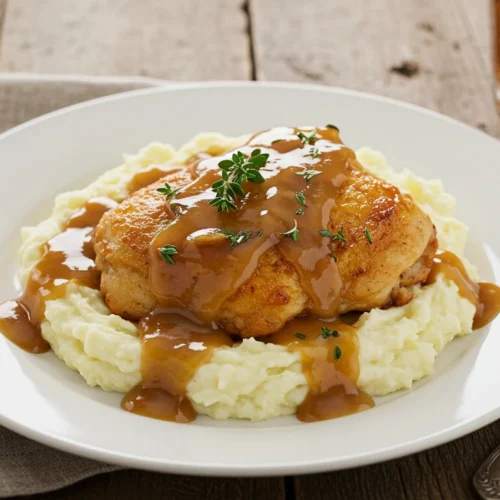
Ultimate Chicken and Gravy Recipe: Comfort Food at Its Best
Ingredients
For the Chicken
- 4 boneless chicken breasts (or thighs for more flavor)
- 2 tbsp olive oil or butter (for searing)
- 1 tsp salt
- 1/2 tsp black pepper
- 1/2 tsp garlic powder (optional)
For the Gravy Base
- 3 tbsp butter (or pan drippings)
- 3 tbsp all-purpose flour
- 2 cups chicken broth
- 1/2 cup milk or cream (for a creamier gravy)
- 1 tsp dried thyme (or 1 tbsp fresh)
- Salt and pepper to taste
Optional Flavor Boosters
- 1 cup sliced mushrooms, onions, or carrots
- Fresh herbs: parsley, rosemary, or extra thyme
- 1 tbsp sour cream (for silky gravy)
- 1/4 cup white wine (for depth)
- 1/4 tsp cayenne pepper or hot sauce (for heat)
- 1/2 tsp smoked paprika or 1 tsp mustard (for sharpness)
Instructions
- Prepare the Chicken: Pat chicken dry and season with salt, pepper, and garlic powder. Heat oil or butter in a skillet over medium-high heat. Sear chicken on both sides until golden brown, about 3–4minutes per side. Remove chicken and set aside (it will finish cooking in the gravy).
- Build the Gravy Base: In the same skillet, melt butter or use pan drippings. Add flour and whisk for 1–2 minutes to form a roux. Slowly pour in chicken broth while whisking, scraping up browned bits. Add milk or cream and thyme. Stir until smooth.
- Simmer Until Thick: Return chicken to the skillet. Lower heat and simmer 15–20 minutes until chicken is cooked through and gravy thickens. Taste and adjust with extra salt, pepper, or lemon juice if needed.
Notes
- Protein swaps: Use turkey, pork chops, or rotisserie chicken.
- Gluten-free option: Replace flour with cornstarch or arrowroot.
- Spice it up: Add cayenne, paprika, or hot sauce.
- Vegetables: Green beans, carrots, peas, or Brussels sprouts can cook in the gravy or be served on the side.
- Serving ideas: Best with mashed potatoes, rice, or egg noodles. Also great with biscuits, cornbread, or roasted vegetables.